
A Unique Approach to Skin Care
Discover a new way to care for your skin with our unique skincare approach.
In harmony with nature and innovation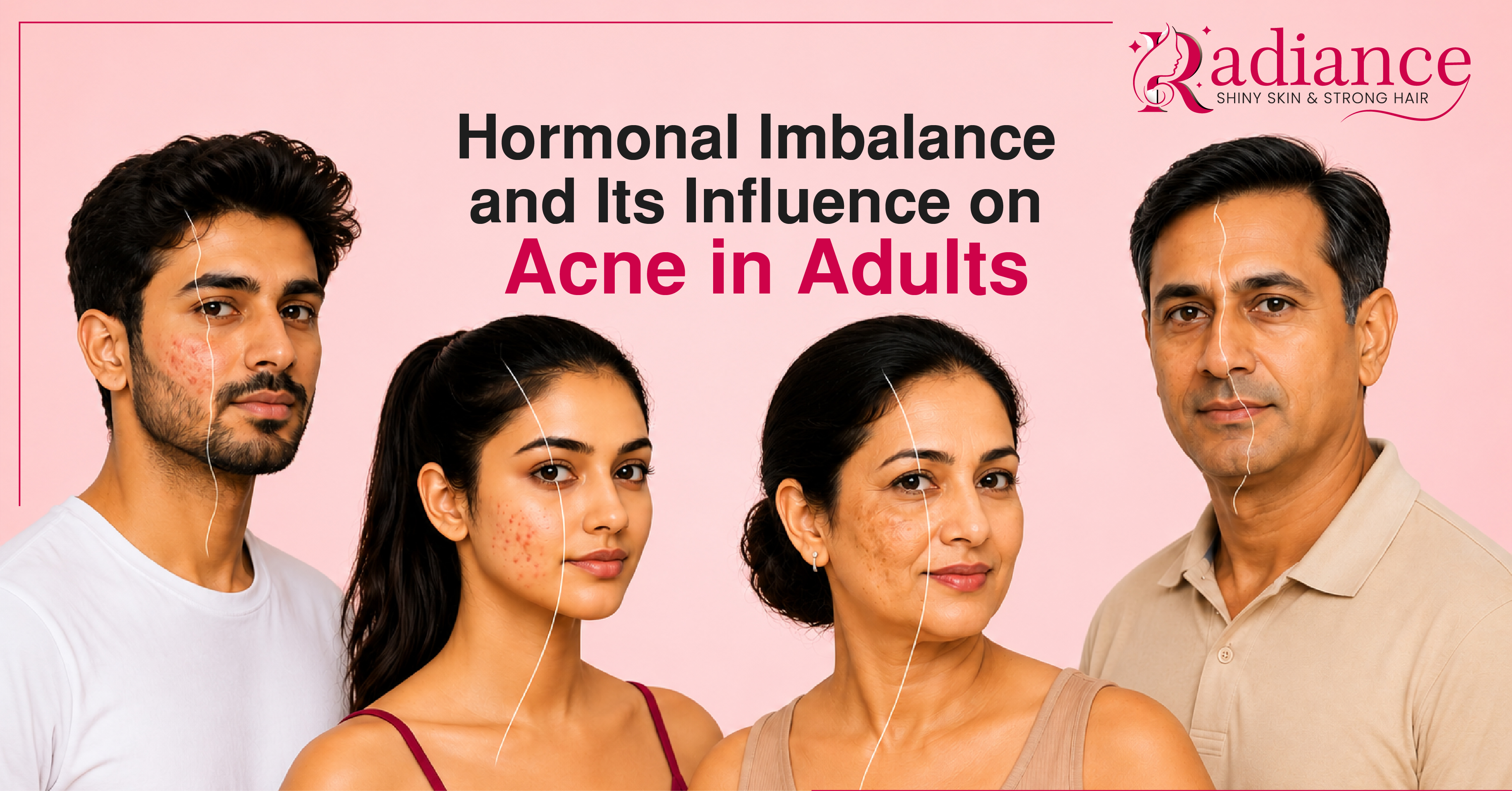
Hormonal imbalance is a leading cause of adult acne, especially in women. Fluctuations in hormones like androgens can increase oil production, clog pores, and trigger breakouts. Understanding how hormones affect acne and following a balanced skincare routine, along with lifestyle changes, can help manage and reduce hormonal acne effectively.
Unlike teenage acne, hormonal acne often develops in adulthood due to internal hormonal imbalances rather than external factors alone, demonstrating the strong connection between hormone fluctuations and recurring adult breakouts.
This type of acne is often persistent and linked to hormone levels and skin health.
Androgens stimulate oil glands, leading to excess sebum production.
Excess oil mixes with dead skin cells, clogging pores and causing acne.
Hormonal fluctuations increase inflammation, making breakouts more severe.
This explains the strong link between how hormones affect acne and recurring adult breakouts.
Hormonal acne can affect both men and women when changes in hormone levels increase oil production and inflammation in the skin.
Common causes include:
Women may also experience hormonal acne due to:
In India, lifestyle factors such as chronic stress, irregular sleep, changing dietary habits, and increasing work-related pressures may contribute to hormonal imbalances, making adult acne a growing concern among both men and women.
Not every breakout is caused by hormonal changes. Hormonal acne has certain characteristics that distinguish it from other types of acne and often follows a recurring pattern.
If acne is persistent, severe, or accompanied by other symptoms of hormonal imbalance, it is advisable to consult a dermatologist for an accurate diagnosis and appropriate treatment plan.
Use mild cleansers that remove excess oil without stripping the skin.
Even acne-prone skin needs hydration to maintain balance.
Choose products that do not clog pores.
Healthy skin barrier reduces irritation and improves resilience.
Modern dermatology-inspired skincare often focuses on balancing oil, calming inflammation, and supporting skin health, making it suitable for hormonal acne care.
A combination of medical guidance and skincare often works best.
These approaches support natural ways to control hormonal acne.
In Indian urban lifestyles:
Can worsen hormonal imbalances and skin issues. A balanced lifestyle combined with skin-friendly routines is essential.
Myth: Only teenagers get acne
Reality: Adults commonly experience hormonal acne
Myth: Oily skin doesn’t need moisturiser
Reality: Hydration is essential for balance
Myth: Acne is only caused by dirt
Reality: Hormones play a major role
Hormonal fluctuations, especially increased androgens, trigger excess oil production and breakouts.
Through stress management, balanced diet, proper sleep, and consistent skincare.
No, it can be managed effectively with the right treatment and lifestyle changes.
Typically on the jawline, chin, and lower face.
Yes, stress increases cortisol levels, which can trigger breakouts.
A gentle routine focusing on cleansing, hydration, and barrier repair.
Hormonal acne in adults requires a deeper understanding of internal imbalances and external care. By combining lifestyle changes, stress management, and a consistent skincare routine, it is possible to control breakouts and improve overall skin health.
Consider dermatologist-guided skincare approaches that support balanced, healthy skin and help manage acne linked to hormonal changes.
Discover a new way to care for your skin with our unique skincare approach.
In harmony with nature and innovation